 How-to
Preventing Sciatic Nerve Pain During Early Pregnancy
Last Updated: November 24, 2026
Quick Summary
Preventing sciatic nerve pain in early pregnancy means keeping your hip and glute muscles moving so they do not tighten around the nerve. Stand and move for two to three minutes every 30 to 45 minutes of sitting, sleep on your side with a pillow between your knees, and sit with both feet flat.
- Relaxin softens pelvic ligaments early, so surrounding muscles work harder and can press on the sciatic nerve.
- Set a timer to stand and move for two to three minutes every 30 to 45 minutes of sitting.
- Sleep on your side with a pillow between your knees to keep your pelvis from twisting overnight.
- Do a morning and evening wall check-in, gently tucking your pelvis toward neutral.
- Skip any stretch that sends pain shooting down your leg, and note when it happens.
Table of Contents
- Why Sciatic Nerve Pain Shows Up So Early
- Prevention First: Small Habits That Protect Your Lower Back
- Pregnancy Sciatica Relief You Can Start at Home
- Sciatic Nerve Pain Pregnancy Stretches for Hips and Glutes
- Prenatal Chiropractic Care and Why It Fits Early Pregnancy
- Red Flags That Mean Stop and Call Your Provider
- Booking Your First Prenatal Visit at New Directions Chiropractic
- Frequently Asked Questions
Why Sciatic Nerve Pain Shows Up So Early
Sciatic nerve pain during early pregnancy is a sharp, shooting, or burning pain that starts in the lower back and travels through the buttocks and down one leg.
Here is what many women don't expect: this can be a first-trimester problem, not only a late-pregnancy one. The cause is not the size of your belly.
Below, we explain why it starts so soon, what you can do to prevent it, and when to call us.
How Early Pregnancy Hormones Change Your Pelvis
A hormone called relaxin rises quickly in early pregnancy.
That softening has a side effect.
Your posture shifts too. Even before you look pregnant, your center of gravity starts to move forward.
Add long hours sitting at a desk or in the car, and you have the recipe for that familiar zing down the leg.
If you want a deeper look at the causes, our team explains why sciatica shows up during pregnancy and the gentle strategies that help.
Prevention First: Small Habits That Protect Your Lower Back
Prevention can make a real difference, especially in early pregnancy when small changes matter most. The keyword here is prevention, and prevention in the first trimester looks different from prevention at 30 weeks, because the forces on your pelvis are different.
Here is the mechanism in plain terms. Relaxin loosens the ligaments that hold your pelvic joints together, so the muscles around your lower back, hips, and buttocks take on more of the load.
Your Daily Prevention Plan for the First Trimester
Think of this as a routine you repeat, not a list you read once. The pattern matters more than any single item.
- Every 30 to 45 minutes of sitting, stand and move for two to three minutes. Set a timer on your phone. Walk to the kitchen, do five slow hip circles in each direction, then sit back down.
- Alternate which hip you lean on. Do not spend hours with your weight shifted onto one side. If you notice yourself leaning, stand up and reset.
- Sit with both feet flat and your knees at or slightly below hip height. A small cushion behind your lower back helps you keep a neutral spine instead of slumping.
- Sleep on your side with a pillow between your knees. This keeps your top hip from rolling forward and twisting your pelvis overnight. A pillow behind your back can help you stay on your side.
- Lift with your legs, not your back. Even a toddler counts. Bend your knees, keep the load close to your body, and avoid twisting while you lift.
How Prevention Changes as Early Pregnancy Progresses
In the first weeks, your center of gravity has not shifted much yet, so posture habits and movement breaks do most of the work.
So the plan shifts slightly.
Many moms find that when activity drops off because they feel tired, tightness can creep in. You do not need a workout.
Here is the daily routine to repeat through your first trimester.
| Habit | What to do | Frequency |
|---|---|---|
| Movement breaks | Stand and move for two to three minutes | Every 30 to 45 minutes of sitting |
| Weight shifting | Alternate which hip you lean on | Throughout the day |
| Sitting posture | Both feet flat, knees at or below hip height | Whenever sitting |
| Sleeping position | Side-lying with a pillow between your knees | Every night |
| Lifting | Bend knees, keep load close, avoid twisting | Every lift |
| Footwear | Supportive, cushioned shoes with flat soles | When on your feet |
| Posture check-in | Stand against a wall, tuck pelvis toward neutral | Morning and evening |
Pregnancy Sciatica Relief You Can Start at Home
When the pain has already started, you want relief you can use today. The good news is that most early-pregnancy sciatic discomfort responds well to simple, gentle care at home.
Try these in order, and stop anything that makes the pain worse:
- Change positions first. Lie on the side that does not hurt, knees bent, pillow between the knees.
- Take a short walk. Five to ten minutes of easy walking often calms a irritated nerve.
- Use heat on the lower back and buttocks. A heating pad on low for 10 to 20 minutes can relax tight muscles.
- Try a warm bath. Warm water takes weight off your joints and eases muscle tightness.
- Do gentle glute and hip stretches. We cover these in the next section.
- Ask about prenatal massage. A therapist trained in prenatal work can release the piriformis muscle.
Always check with your obstetric clinician before trying a new remedy, especially heat and any over-the-counter medication.
If you want to understand how prenatal chiropractic care may help with sciatic-type pain, our pregnancy sciatica guide walks through what to expect.
Heat, Cold, and Positioning That Actually Help
Heat and cold do different jobs, and using the wrong one can waste your time.
- Heat relaxes tight muscles and improves blood flow. Best for muscle tightness in the lower back and buttocks.
- Cold calms sharp, fresh pain and swelling. Best for the first day or two of a new flare.
- Positioning is the quiet hero. Side-lying with a pillow between the knees, or sitting with a small cushion behind your lower back, takes pressure off the nerve.
A common mistake is lying flat on your back for long stretches. That can press the nerve and the growing uterus against the same structures. Side-lying is kinder to your body right now.
Sciatic Nerve Pain Pregnancy Stretches for Hips and Glutes
Sciatic nerve pain pregnancy stretches should be slow, gentle, and never painful. The goal is to release tight muscles in the hips and buttocks, not to push through a sharp zing.
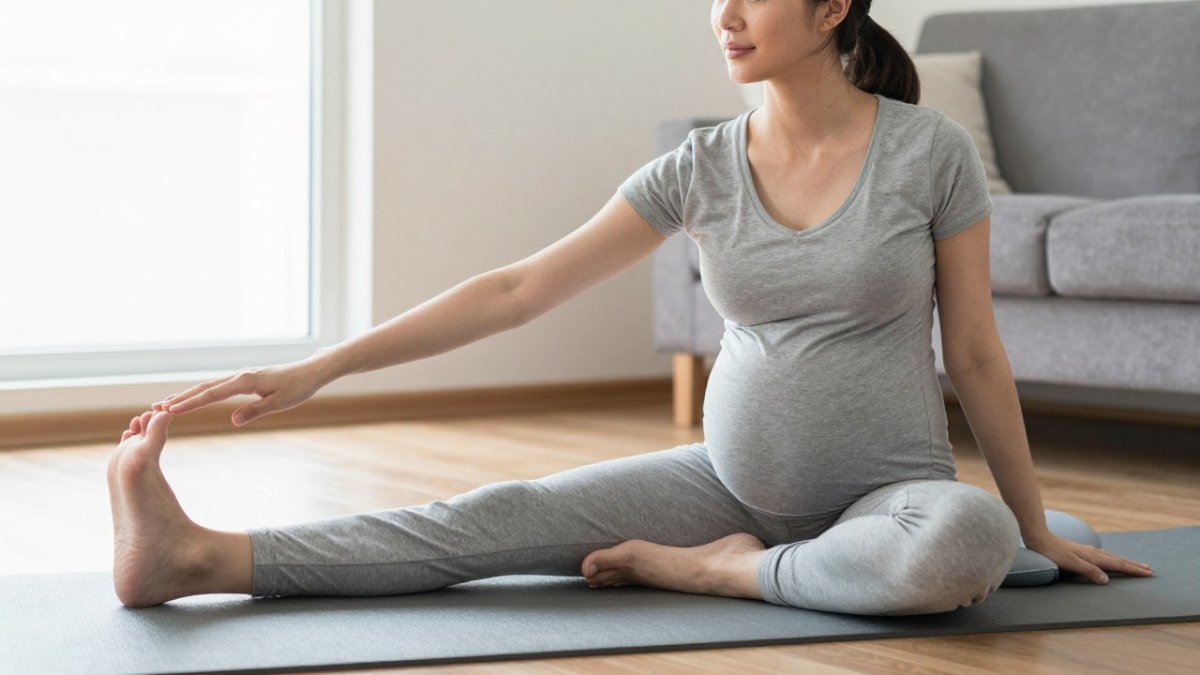
Try these three, holding each for 20 to 30 seconds and breathing slowly:
- Seated figure-four. Sit in a chair. Cross one ankle over the opposite knee. Lean forward gently until you feel a stretch in the buttocks.
- Cat-cow on hands and knees. Slowly arch and round your back. This moves the lower back without strain.
- Standing hip stretch. Hold a counter for balance. Step one foot back and gently shift your weight forward.
Skip any stretch that sends pain shooting down the leg. If you want to understand what a pregnancy chiropractor can add to your stretching routine, read our guide to relief and what to expect.
Prenatal Chiropractic Care and Why It Fits Early Pregnancy
Prenatal chiropractic care is gentle, drug-free care that focuses on keeping your spine and pelvis balanced as your body changes.
At New Directions Chiropractic, Dr. Jonathon Harrison is Webster Technique Certified.
Care in the first trimester can be about prevention as much as relief.
If you are looking for a Webster-certified pregnancy chiropractor in the area, you can learn more about our prenatal and Webster Technique care.
Red Flags That Mean Stop and Call Your Provider
Most of what you feel in early pregnancy is routine discomfort, and it responds to the gentle care we have covered. But some symptoms are not a normal part of pregnancy sciatica, and they need prompt attention. The goal of this section is to help you tell the difference, so you are not brushing off something important and not panicking over something ordinary.
Symptoms That Need Prompt Attention
Call your obstetric clinician right away if you notice any of the following:
- Loss of bladder or bowel control. This is different from the frequent urination of early pregnancy. It means you cannot hold urine or stool when you otherwise could.
- Numbness in the groin or inner thighs, sometimes called saddle numbness. This is a change in sensation in the area that would touch a saddle if you were riding a horse.
- Weakness in one or both legs that is getting worse. Not just heaviness after a long day, but a leg that gives way or drags.
- Pain that is severe, constant, and getting worse rather than coming and going with position changes.
- Fever with back pain. Back pain plus fever is a combination that deserves a call.
These signs can point to something that needs prompt medical attention. Do not wait to see if they pass.
Telling Sciatic Pain Apart from Other Pregnancy Pains
One reason red flags get missed is that several common pregnancy pains feel similar at first. Here is how to sort them out.
- Sciatic nerve irritation usually follows a line from the lower back through one buttock and down the back of one leg. It often has a shooting or burning quality and may change with sitting, standing, or certain stretches.
- Pelvic girdle pain tends to sit at the front of the pelvis or across the pubic area, and it often flares when you walk, climb stairs, or turn over in bed. It is more of a deep ache or a feeling that the pelvis is unstable than a shooting leg pain.
- Round ligament pain is usually a brief, sharp pull low on one or both sides of the belly, often triggered by a quick movement, a cough, or a sneeze. It does not travel down the leg.
If your pain does not fit the sciatic pattern, say so at your next visit.
Watch out: brushing off numbness or weakness as "just sciatica" is the most common mistake we see. When in doubt, call your provider.
Booking Your First Prenatal Visit at New Directions Chiropractic
Your first visit is a conversation. We will ask about your pregnancy, your pain, and your daily habits.
Wear comfortable clothes you can move in, and bring any questions you have.
If you want to know what to expect, our team walks you through your first prenatal chiropractic visit, including what to wear and what to bring.
Sciatic nerve pain in early pregnancy is common, but it does not have to run your days.
Get started with New Directions Chiropractic and take the first step toward a more comfortable pregnancy.
Frequently Asked Questions
Can you have sciatic nerve pain in the first trimester?
Yes. Sciatic nerve pain can start surprisingly early, sometimes before you have told anyone you are expecting. Rising progesterone loosens ligaments around your pelvis, and your posture begins shifting sooner than most people expect. That combination can irritate the sciatic nerve even before your belly grows. If you feel a shooting pain down one buttock or leg in those first weeks, it is worth mentioning to your provider and starting gentle prevention habits right away.
How can you avoid sciatic nerve pain during pregnancy?
Prevention comes down to a few steady habits. Change positions every 30 to 45 minutes instead of sitting or standing for long stretches. Sleep on your side with a pillow between your knees to keep your hips level. Keep one foot propped on a low stool when you stand at the counter. Add gentle hip and glute stretches a few times a week. These small moves reduce the pressure that builds on the sciatic nerve, and they are easiest to keep up when you start them early.
What gentle stretches may help with sciatic nerve pain during pregnancy?
The seated piriformis stretch, a supported figure-four stretch, and a hands-and-knees cat-cow are good starting points. Hold each one for about 20 to 30 seconds and breathe slowly. Stop if you feel sharp pain, numbness, or tightening in your belly. Avoid deep twists and any stretch that puts pressure on your abdomen. A few minutes of gentle stretching exercises done consistently beats a long session once a week.
Can chiropractic care support comfort during early pregnancy?
Prenatal chiropractic care focuses on keeping your pelvis and lower back moving well as your body changes. Some moms find that chiropractic care alongside walking, stretching, and posture changes helps them manage discomfort. It is not a cure for sciatica, and results vary. If you are considering it, look for a chiropractor with pregnancy-specific training and tell them about your symptoms at your first visit.