 How-to
Chiropractic Care for Toddlers and Preschoolers: A Parent's Guide
Quick Summary
Chiropractic care for toddlers and preschoolers is gentle, hands-on care focused on the spine and nervous system. It uses very light pressure, and every visit is tailored to your child's size, age, and comfort level. Parents should expect a health history review, a gentle exam, and a clear explanation of what was found.
- Pediatric adjustments use far lighter pressure than adult chiropractic care.
- Common signs parents notice include trouble settling, fussiness during diaper changes, and favoring one side when turning the head.
- Some children feel a little sore or tired for a day after a visit.
- Fever, unexplained weight loss, or severe or worsening pain should be evaluated before any chiropractic visit.
- Research on pediatric chiropractic is still growing and is limited, especially for children.
Table of Contents
- What Chiropractic Care for Toddlers and Preschoolers Involves
- Signs Parents Notice in Toddlers That Prompt a Chiropractic Visit
- Is Pediatric Chiropractic Safe for Your Child?
- Toddler Chiropractic Adjustment: What Happens at a First Visit
- What the Research Says About Pediatric Chiropractic
- Pros and Cons of Chiropractic Adjustments for Toddlers and Preschoolers
- Booking Your Child's First Visit at New Directions Chiropractic
- Frequently Asked Questions
What Chiropractic Care for Toddlers and Preschoolers Involves
If your little one has been fussy, restless, or just not quite themselves, you're probably wondering whether chiropractic care could help. At New Directions Chiropractic, we see concerned parents every week, and we understand how much you want to get this right for your child. (Source: National Institutes of Health)
Chiropractic care for toddlers and preschoolers is gentle, hands-on care focused on the spine and nervous system. Your child's body is still growing fast, and the spine is the main pathway for messages between the brain and the rest of the body. When the spine moves well, the nervous system can do its job.
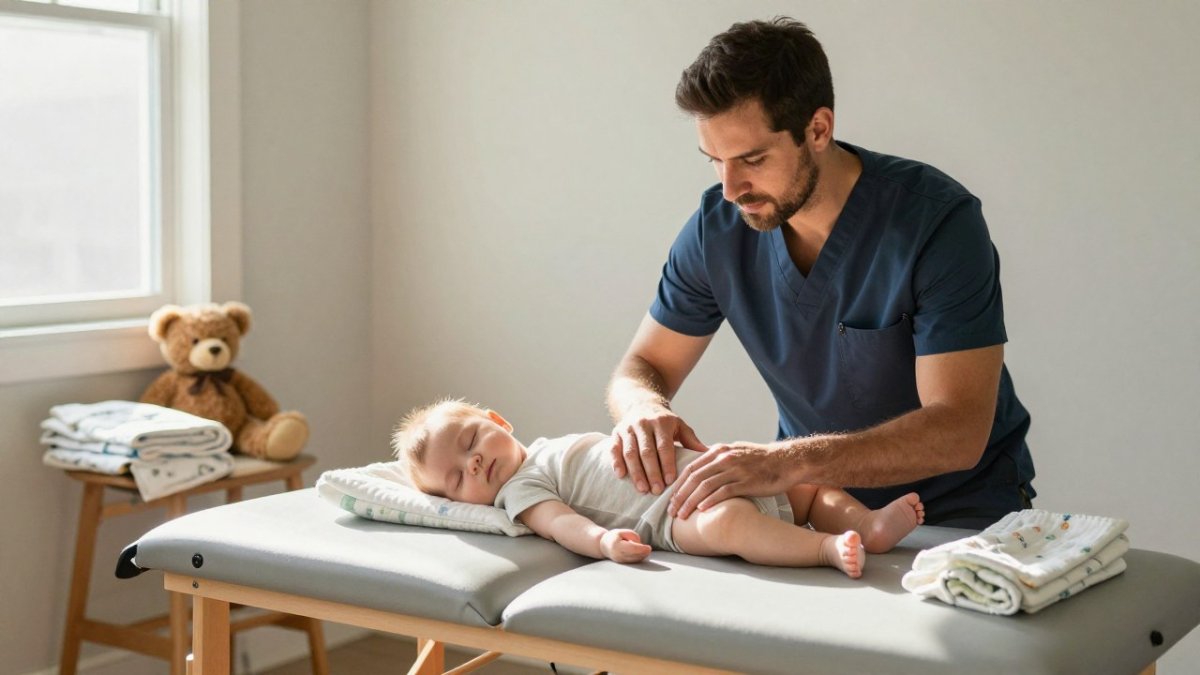
Pediatric chiropractic care uses very light pressure. The techniques look nothing like the adjustments adults receive. Every visit is tailored to your child's size, age, and comfort level.
Here is what most families can expect from care:
- A review of your child's health history and your concerns
- A gentle check of posture, movement, and spinal alignment
- Age-appropriate adjustments using light, precise pressure
- A clear explanation of what we found and what comes next
We believe parents should know what is happening every step of the way. Ask questions at any time.
Signs Parents Notice in Toddlers That Prompt a Chiropractic Visit
Parents often notice small changes first. You know your child best, so trust what you see.
Common signs that parents mention include:
- Trouble settling down or sleeping through the night
- Fussiness during diaper changes or feeding
- Favoring one side when turning the head
- Walking or standing with an uneven posture
- Frequent tummy discomfort or irritability
- Changes in mood or focus after a fall or bump
Not every sign means something serious. But if you see a pattern that keeps coming back, it is worth a closer look. Many parents bring their child in simply to find out what is going on.
If your child has a fever, unexplained weight loss, severe pain, or symptoms that are getting worse, see your child's pediatrician first.
Is Pediatric Chiropractic Safe for Your Child?
This is the question we hear most, and it deserves a straight answer. Our honest answers to the questions parents ask most cover safety and more. Pediatric chiropractic care uses far lighter pressure than adult care, and the safety of any visit depends heavily on the provider's training and technique. You deserve to understand both sides before you decide.
Why the pressure matters. A toddler's spine and joints are still mostly cartilage and are far more mobile than an adult's. The techniques used for a two-year-old look nothing like the manual adjustments adults receive. Gentle, low-force techniques are used in pediatric care rather than the quick thrusts associated with adult care. If anyone proposes a forceful adjustment on your toddler, that is a reason to pause and ask questions.
Possible side effects. Like any hands-on care, there are possible side effects. Some children feel a little sore or tired for a day after a visit, and some are fussier than usual for a few hours. Serious problems are rare but possible, which is why the provider's training and technique matter so much.
Age-specific safety considerations. Safety looks different across the toddler-to-preschool range. With a one- or two-year-old, the main concerns are keeping the child calm, never forcing a position, and reading cues that your child has had enough. With a three- to five-year-old, you can explain what will happen in simple words and let your child say stop. Consent at this age is real: a preschooler who is scared and tense is not a good candidate for hands-on care that day, and a good provider will reschedule rather than push through.
Red flags that mean medical evaluation comes first. Some symptoms should never be treated as a chiropractic matter. If your child has a fever, unexplained weight loss, severe or worsening pain, a recent significant fall or head injury, numbness or weakness, trouble walking, loss of bladder or bowel control, or symptoms that are getting worse rather than better, see your child's pediatrician first. Those signs point to something that needs medical assessment, not a spinal adjustment.
Questions to ask before your first visit. A good provider will answer all of these clearly, and if you feel uneasy about any answer, that is important information.
- Is the chiropractor licensed to practice in your state?
- How much training do they have specifically in pediatric care?
- What techniques do they use for toddlers versus preschoolers?
- How will they explain what they are doing before they do it, and how will they handle it if my child says stop?
- What side effects should I watch for afterward, and when should I call?
- How do they coordinate with my child's pediatrician?
Watch out: if a provider promises to fix colic, asthma, sleep, or immunity, or discourages you from seeing your pediatrician, treat that as a warning sign rather than a selling point.
Toddler Chiropractic Adjustment: What Happens at a First Visit
We know a first visit can feel a bit nerve-wracking. Here is how we handle it at New Directions Chiropractic.

First, we sit down and talk. We ask about your child's birth, sleep, feeding, and any falls or injuries. We want the full picture before we touch anything.
Next, we do a gentle exam. We watch how your child moves, sits, and stands. We check the spine and joints with light, careful touch.
If an adjustment is right for your child, it is quick and gentle. Many toddlers barely notice it. Some even giggle or fall asleep.
Afterward, we explain what we found and suggest a plan. You decide what feels right for your family.
Tip: Bring a favorite toy or blanket. A familiar comfort item helps a lot.
What the Research Says About Pediatric Chiropractic
Research on pediatric chiropractic is still growing, and the evidence is uneven across concerns. We want to be clear about that rather than lump everything together.
Musculoskeletal complaints. For concerns like posture and movement asymmetry, a hands-on exam can assess what parents notice, though high-quality studies specific to this age group remain limited.
Colic, sleep, and feeding. These are the concerns parents ask about most, and they are also where claims tend to outrun the evidence. Results from small studies on infant colic and sleep vary, and findings do not automatically carry over to toddlers and preschoolers. We will not tell you chiropractic is proven to fix sleep or colic, because it is not.
Asthma, immunity, behavior, and focus. Claims in these areas are common on clinic pages and are not supported by strong evidence in children. If a provider markets adjustments as a way to boost immunity or improve behavior, that is a claim to question, not a reason to book.
Safety reporting. Serious events are rare enough that they are hard to study, which is another reason training and technique matter.
What this means for your decision. The evidence is strongest where the concern is musculoskeletal and the care is gentle and targeted, and weakest where broad health claims are made. A reasonable path is to separate the two: ask what specific concern you are addressing, ask what the evidence is for that concern at your child's age, and ask what improvement would look like and by when. If no one can answer those questions plainly, that tells you something.
We follow the research closely and share what we learn. We will never promise a specific result for your child. Instead, we will be clear about what we know, what we are still learning, and where the evidence simply is not there yet.
Pros and Cons of Chiropractic Adjustments for Toddlers and Preschoolers
Every family weighs care differently. Here is an honest look at both sides.
Pros:
- Gentle pressure suited to small bodies
- A hands-on approach focused on the spine and nervous system
- Care that can fit alongside your pediatrician's guidance
- Education and support for parents at every step
Cons:
- Research on children is still limited
- Some children feel sore or tired for a short time after a visit
- Care takes time, and results are not always fast
- It is not a replacement for medical evaluation
Think about what matters most to your family, then decide what fits.
Here is a quick side-by-side look at the upsides and downsides parents should weigh.
| Pros | Cons |
|---|---|
| Gentle pressure suited to small bodies | Research on children is still limited |
| Hands-on focus on spine and nervous system | Some children feel sore or tired briefly |
| Can fit alongside pediatrician guidance | Care takes time; results not always fast |
| Education and support for parents | Not a replacement for medical evaluation |
Booking Your Child's First Visit at New Directions Chiropractic
If you are ready to take the next step, we would love to meet your family. Our kid-friendly clinic is set up to help children feel calm and comfortable from the moment they walk in.
Start by booking your first visit through our website.
At New Directions Chiropractic, Dr. Jonathon Harrison takes the time to explain every step. Our goal is to support your child's nervous system health and healthy development. Book your child's first visit today, and bring your questions. We are happy to answer every one. You can also read about our gentle chiropractic care for babies and children in Allen, TX.
Frequently Asked Questions
Can a 2-year-old go to a chiropractor?
Yes, many families bring children as young as toddlers for chiropractic evaluation. At New Directions Chiropractic, care for young children is gentle and tailored to age, with a focus on the nervous system and healthy development. Before the first visit, it helps to share your child's medical history and any concerns about sleep, feeding, or movement. Your child's chiropractor will explain what they find and whether care is a good fit. If your toddler has a fever, an injury, or symptoms that worry you, contact your child's pediatrician first.
Is pediatric chiropractic safe?
Pediatric chiropractic care is generally considered gentle, because adjustments on infants and young children use very light pressure compared with adult care. Research on its safety in children is limited, so the evidence should be weighed carefully. Ask any chiropractor to explain their technique, their training in pediatric care, and how they handle concerns. Parents should always report new or worsening symptoms to their child's doctor. A qualified practitioner will discuss risks openly before care begins.
How is a toddler's chiropractic adjustment different from an adult's?
A toddler's adjustment is much gentler than an adult's. The chiropractor uses light, age-appropriate pressure and smaller movements suited to a growing body. Visits are often shorter and built around play and comfort, so the child feels at ease. The focus is on posture, movement, and nervous system function rather than forceful correction. Parents are usually present throughout and can ask questions at any time.
What questions should parents ask a pediatric chiropractor?
Start by asking about the chiropractor's training and experience with children, and whether they hold board certification from the National Board of Chiropractic Examiners. Ask what they would look for at a first visit and how they explain findings. Find out how progress is measured and how long care usually lasts. Ask how they coordinate with your child's pediatrician. Clear answers to these questions help you decide with confidence.