 How-to
Pregnancy Chiropractor for Sciatic Pain: A How-To Guide
Last Updated: October 23, 2026
Quick Summary
A pregnancy chiropractor for sciatic pain treats nerve compression and irritation that causes sharp, burning, or tingling sensations down the leg during pregnancy. Using specialized techniques like the Webster Technique and pregnancy-safe positioning, these chiropractors restore pelvic balance and spinal alignment to reduce nerve pressure and muscle tension.
- Sciatic pain during pregnancy occurs when weight gain, hormonal changes, and postural shifts compress the nerve in your lower back or gluteal muscles.
- The Webster Technique is a specialized chiropractic approach that addresses pelvic balance specifically for pregnant patients.
- Pregnancy-safe adjustments use lighter force, slower movements, and special positioning with pregnancy tables or side-lying positions.
- Qualified prenatal chiropractors should have Webster Technique certification.
- Most women see meaningful improvement within 4-6 weeks of consistent chiropractic care combined with home stretching and physical therapy.
Table of Contents
- Understanding Sciatica During Pregnancy
- How Prenatal Chiropractic Care May Help
- Pregnancy-Safe Chiropractic Adjustments Explained
- Stretches for Sciatica During Pregnancy
- When to See a Chiropractor During Pregnancy
- Differentiating Sciatica from Other Pregnancy-Related Pain
- What to Expect During Treatment and Recovery
- Frequently Asked Questions
Understanding Sciatica During Pregnancy
A pregnancy chiropractor for sciatic pain treats nerve pain that travels down the leg during pregnancy. It happens when the sciatic nerve gets compressed or irritated. At New Directions Chiropractic, we work with expecting mothers who experience this sharp, burning, or tingling sensation that can make daily activities uncomfortable.

How pregnancy changes affect the sciatic nerve
Your body transforms dramatically during pregnancy. The sciatic nerve runs from your lower back through your hips and down each leg.
Weight gain puts extra pressure on your lower back and pelvis. Hormonal changes loosen your ligaments and joints. Your posture adjusts to support the added weight.
The nerve compression usually happens in the lower back or near the gluteal muscles.
Common symptoms of pregnancy-related sciatic pain
Pregnancy-related sciatic pain feels different for each person. You might notice:
- Sharp, shooting pain down one leg
- Burning or tingling sensations in the leg or foot
- Numbness in parts of your leg
- Pain that worsens when sitting or standing for long periods
The pain typically starts in your lower back or buttocks. It radiates down the back of your thigh and into your calf or foot. Some women describe it as a constant ache. Others feel sudden sharp jolts.
Pain often increases at the end of the day. Certain positions make it worse. Lying down usually brings relief.
How Prenatal Chiropractic Care May Help
A pregnancy chiropractor for sciatic pain uses specialized techniques designed for expecting mothers. These adjustments differ from standard chiropractic care because your body needs gentler, more targeted support.
Pelvic balance and spinal alignment during pregnancy
Pelvic balance is crucial during pregnancy. When your pelvis is balanced, your spine sits properly.
Prenatal chiropractic care focuses on restoring pelvic balance.
Many chiropractors use the Webster Technique for pregnant patients. This approach addresses pelvic balance specifically.
When your pelvis tilts too far forward or backward, nerve irritation increases.
Spinal alignment also matters. Your lumbar spine supports most of your upper body weight during pregnancy.
Gentle adjustments and pregnancy-safe positioning
Pregnancy-safe positioning is essential during any chiropractic adjustment. Your chiropractor should never have you lie flat on your stomach.
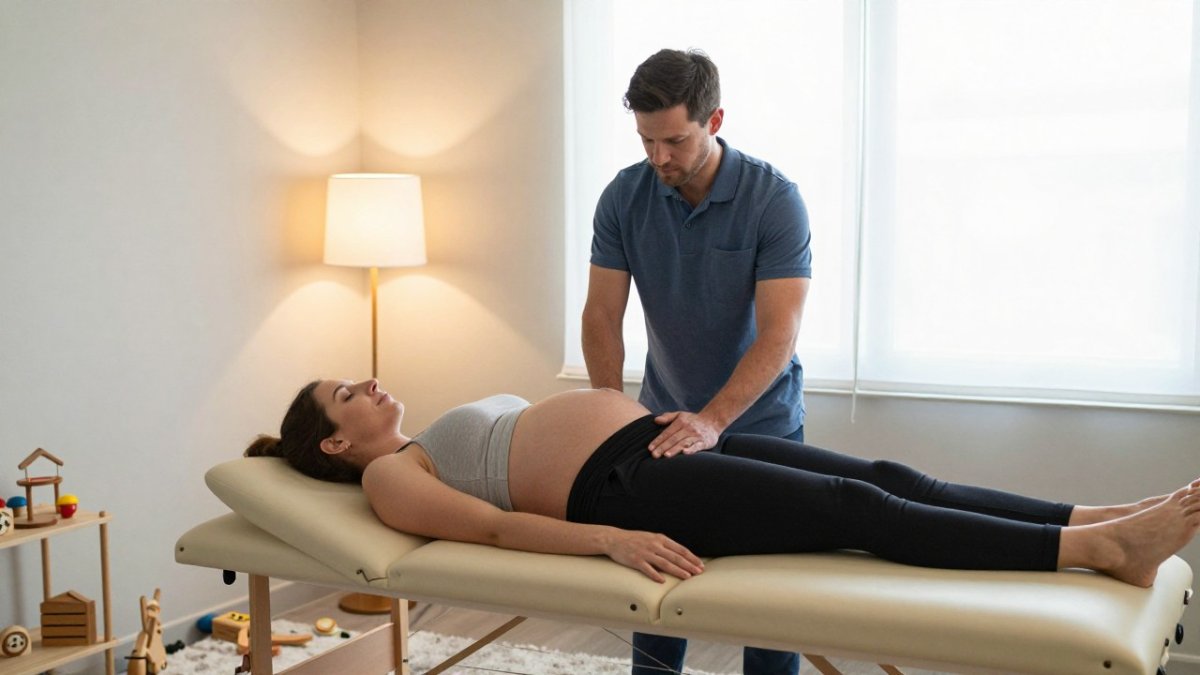
Side-lying positions work well for most adjustments. Some chiropractors use a pregnancy table with a cutout for your abdomen.
The adjustments themselves are gentler than standard care. Your chiropractor uses lighter force. Movements are slower and more controlled.
Gentle adjustments can help:
- Reduce muscle hypertonicity in the gluteal muscles
- Improve joint mobility in your sacroiliac joints
- Decrease nerve irritation through better alignment
- Support better posture and body mechanics
Your chiropractor may also address supporting muscles.
Pregnancy-Safe Chiropractic Adjustments Explained
Understanding what happens during a prenatal adjustment helps you feel more confident. The process differs from regular chiropractic care in important ways.
What to expect during a prenatal adjustment
Your first visit includes a thorough consultation.
A physical examination follows. Your chiropractor checks your posture, spinal alignment, and pelvic balance.
Some chiropractors use X-rays, but many avoid this during pregnancy.
The adjustment itself takes 15-30 minutes. You'll be positioned comfortably on a pregnancy table or side-lying.
After the adjustment, you might feel immediate relief.
Safety screening and contraindications
Not every pregnant person is a good candidate for chiropractic care. Your chiropractor should screen for contraindications before treating you.
Absolute contraindications include:
- Placental abruption or placenta previa
- Preeclampsia or gestational hypertension
- Vaginal bleeding or threatened miscarriage
- Severe osteoporosis
Relative contraindications require careful evaluation:
- History of difficult pregnancies
- Multiple pregnancies
- Recent trauma or injury
- Severe morning sickness
Your chiropractor should ask detailed questions about your medical history. They should know about any complications in this pregnancy.
If you have any concerns, your OB/GYN and chiropractor should communicate.
Stretches for Sciatica During Pregnancy
Gentle stretching at home complements professional chiropractic care. These stretches help reduce muscle tension and improve mobility. Always move slowly and stop if you feel sharp pain.
Safe stretching techniques for each trimester
Early pregnancy (first trimester) allows more flexibility. Your belly is smaller. Your center of gravity hasn't shifted dramatically yet.
Safe stretches for early pregnancy:
- Gentle hip flexor stretches while standing
- Piriformis stretches in a seated position
- Hamstring stretches with proper support
- Cat-cow poses on hands and knees
Middle pregnancy (second trimester) requires more modifications. Your belly grows. Balance becomes trickier.
Second trimester modifications:
- Seated figure-four stretch with support
- Wall-supported hip stretches
- Gentle spinal twists while seated
- Supported lunges with hands on a chair
- Pelvic tilts lying on your back
Late pregnancy (third trimester) demands the most caution. Your center of gravity shifts forward. Balance challenges increase.
Third trimester approaches:
- Supported standing hip stretches
- Seated stretches with back support
- Pelvic floor stretches in comfortable positions
- Gentle side-lying stretches
- Wall-supported hamstring stretches
At-home pain management and prevention
Daily stretching helps prevent sciatic pain from worsening. Consistency matters more than intensity. Spend 5-10 minutes stretching each day.
Prevention strategies include:
- Maintain good posture while sitting and standing
- Avoid prolonged sitting in one position
- Use a pregnancy pillow for support while sleeping
- Wear supportive, flat shoes
- Apply heat or ice to painful areas
Heat therapy often helps more than ice during pregnancy. A heating pad set to low temperature can ease muscle tension. Apply heat for 15-20 minutes at a time.
Rest is important too. Don't push through severe pain. Listen to your body's signals.
When to See a Chiropractor During Pregnancy
Timing matters when seeking chiropractic care during pregnancy. Early intervention often prevents pain from worsening.
Choosing a qualified prenatal chiropractor
Not all chiropractors have prenatal training. Look for specific qualifications:
- Webster Technique certification
- Pediatric or prenatal experience certification
- Continuing education in pregnancy care
- Experience working with expecting mothers
- Positive references from other pregnant patients
Ask potential chiropractors these questions:
- Do you have specific training in prenatal care?
- What techniques do you use for pregnant patients?
- How do you handle pregnancy complications?
- Will you communicate with my OB/GYN?
- What's your experience treating sciatic pain?
- Do you have pregnancy-specific equipment?
Interview multiple chiropractors before deciding. A good fit matters. You should feel comfortable and confident.
At New Directions Chiropractic, Dr. Jonathon Harrison brings specialized training to pregnancy-related pain. His approach emphasizes nervous system health and pelvic balance. He works within a kid-friendly environment designed for family wellness.
Red flags and when to contact your obstetric clinician
Contact your OB/GYN if you experience:
- Sudden severe pain that doesn't improve with rest
- Progressive weakness in your leg or foot
- Loss of bladder or bowel control
- Numbness in your genital area
- Severe muscle weakness
These symptoms can indicate serious conditions. Your obstetric clinician needs to evaluate them promptly.
Also contact your OB/GYN before starting chiropractic care if you have:
- Placenta previa or abruption
- Preeclampsia
- Vaginal bleeding
- History of miscarriage
- Multiple pregnancies
Communication between your healthcare providers keeps you safer. Share information about chiropractic treatment with your OB/GYN. Report any changes in your symptoms.
Differentiating Sciatica from Other Pregnancy-Related Pain
Sciatic nerve pain isn't the only discomfort you might experience during pregnancy. Other conditions cause similar symptoms.
Round ligament pain and other common pregnancy discomfort
Round ligament pain feels sharp and sudden. It usually occurs in your lower abdomen or groin.
Round ligament pain typically:
- Occurs suddenly with movement
- Lasts a few seconds to minutes
- Feels sharp or stabbing
- Happens on one or both sides
- Improves with rest and position changes
Sciatic nerve pain differs because it:
- Radiates down the back of your leg
- Often feels like burning or tingling
- Can persist for hours or days
- Worsens with certain positions
- Affects your ability to walk or sit
Pelvic girdle pain is another common condition. It involves pain in your pubic bone area or sacroiliac joints.
Ligament pain in your back can mimic sciatica. Your uterine ligaments stretch during pregnancy.
Your chiropractor helps differentiate these conditions. Proper diagnosis ensures you get appropriate treatment.
What to Expect During Treatment and Recovery
Recovery from pregnancy-related sciatic pain varies. Most women notice improvement with consistent care.
Visit frequency and realistic timelines for relief
Initial treatment often involves weekly visits. Your chiropractor assesses your response after 2-3 visits. Some women feel better immediately.
Realistic timelines depend on:
- How long you've had the pain
- Severity of nerve compression
- Your overall health and fitness level
- How closely you follow home care recommendations
- Your pregnancy stage
Many women see meaningful improvement within 4-6 weeks. Some notice relief after just a few visits. Others need ongoing care throughout pregnancy.
Your chiropractor adjusts your treatment plan based on your progress. As your pregnancy advances, your care may change.
Pain relief often comes in stages. Initial visits reduce acute pain. Ongoing care maintains improvement and prevents recurrence.
Combining chiropractic care with physical therapy
Physical therapy complements chiropractic care well. A physical therapist can teach you strengthening exercises.
Physical therapy focuses on:
- Core strengthening for stability
- Pelvic floor muscle training
- Postural education and correction
- Movement patterns that protect your spine
- Functional exercises for daily activities
Your chiropractor and physical therapist can coordinate. They work toward the same goals.
Some physical therapists specialize in prenatal care. They understand pregnancy-specific modifications. Ask your chiropractor for referrals to prenatal physical therapists.
Massage therapy also helps. A massage therapist trained in prenatal care can release muscle tension.
Pregnancy-related sciatic pain doesn't have to limit your experience of expecting. Jonathon Harrison uses pregnancy-safe techniques and pelvic balance strategies to address sciatic nerve pain. Book Your First Visit today and discover how specialized prenatal chiropractic care can support your pregnancy comfort and wellness.
Frequently Asked Questions
Is chiropractic care safe during pregnancy?
Prenatal chiropractic care uses gentle, pregnancy-safe adjustments and positioning techniques designed specifically for expectant mothers. A qualified prenatal chiropractor screens for contraindications and uses modified techniques that protect both you and your baby. Always inform your chiropractor of your pregnancy status and trimester, and maintain regular communication with your obstetric clinician to ensure coordinated care.
Can a chiropractor help with sciatic pain during pregnancy?
Yes. Prenatal chiropractic care may help by addressing pelvic balance, reducing nerve irritation, and restoring spinal motion. As pregnancy progresses, weight gain and postural changes place stress on the sciatic nerve. Gentle adjustments and attention to spinal alignment can reduce muscle tension and ease pain, though results vary by individual.
What stretches for sciatica during pregnancy are safe to do at home?
Safe stretches include gentle hip flexor stretches, modified pigeon pose (seated), and pelvic tilts. Avoid deep twists and forward folds that compress the abdomen. Always move slowly, stop if you feel sharp pain, and consult your chiropractor or physical therapist before starting any new stretching routine. Consistency matters more than intensity.
When should I see a chiropractor during pregnancy for sciatic pain?
Contact a prenatal chiropractor as soon as sciatic pain begins—early intervention often prevents symptoms from worsening. Most expectant mothers benefit from care starting in the second or third trimester when weight gain increases spinal stress. Always confirm your chiropractor has prenatal certification and experience.