 How-to
How to Prepare for Your First Prenatal Chiropractic Visit
Last Updated: November 17, 2026
Quick Summary
Before your first prenatal chiropractic visit, gather your medical history and any recent records, and write down your current symptoms and when they happen. Also list the questions you want answered and plan comfortable clothing and transportation. Preparing ahead lets your visit focus on what matters most to you.
- Bring a summary of your pregnancy, including your due date, complications, and medications or supplements.
- Note when each symptom started and what makes it better or worse.
- Write your questions down before you come in, grouped by symptoms, safety, and scheduling.
- Wear loose clothing you can move in and plan a route that gives you extra time.
- Call the office beforehand with any questions about insurance or billing.
Table of Contents
- Why Preparing Ahead Makes Your First Prenatal Visit Easier
- When to Schedule Your First Prenatal Chiropractic Visit
- Before the Visit: Your Preparation Checklist
- What to Expect at a Prenatal Chiropractic Exam
- What to Wear, Bring, and Do the Day Of
- Credentials, Consent, and Your First Care Plan
- Booking Your First Prenatal Visit with New Directions Chiropractic
- Frequently Asked Questions
Why Preparing Ahead Makes Your First Prenatal Visit Easier
Walking into your first prenatal chiropractic visit can feel a little nerve-wracking. That is completely normal. If you are wondering why back pain happens in pregnancy and what prenatal chiropractic can and can't do, that is a good place to start.
At New Directions Chiropractic, we want every expecting mom to leave the first visit feeling heard. Showing up with your questions, your history, and a clear picture of how you feel helps us build the right plan for you.
Think of this as a conversation across the table. You bring what you know about your body, and we bring our training in gentle, pregnancy-adapted care. Together, we figure out what fits.
When to Schedule Your First Prenatal Chiropractic Visit
Many moms book their first visit once back, hip, or pelvic discomfort starts to get in the way of daily life. Others come in early in pregnancy just to get a baseline check. Either timing can work.
If you are unsure, ask your OB or midwife for their input first.
Book your visit when you have a little time to settle in. Rushing in between errands makes it harder to talk through your concerns.
Before the Visit: Your Preparation Checklist
A short checklist can keep you organized. Work through these steps a few days before your appointment, and keep the list somewhere you will actually see it, like a note on your phone or a sheet on the fridge.
- Gather your medical history and any recent records. If sciatica is part of what you are dealing with, gentle movement and sleep strategies for sciatica in pregnancy can help you prepare your symptom notes.
- Write down your current symptoms and when they happen.
- List the questions you want answered.
- Plan comfortable clothing and transportation.
Preparing before the visit means less stress on the day itself. It also helps us spend our time on what matters most to you. See exactly what happens at your first prenatal chiropractic appointment so you know what to wear and bring.
Gathering your medical history and records
Bring a clear summary of your pregnancy so far. Include your due date, any complications, and any medications or supplements you take. If you have recent notes from your OB, bring copies.
Do not forget your past back, neck, or injury history. Even old injuries can shape how your body feels now. A simple one-page timeline works well: note when each symptom started, what makes it better or worse, and whether it changes with rest, walking, or sleep position.
Watch out: if you are unsure whether a record is relevant, bring it anyway. It is easier to set a page aside than to wish you had it.
Questions to write down ahead of time
Write your questions down before you come in. It is easy to forget them once you are in the room. Consider asking:
- What does a first prenatal visit usually involve?
- How do you adjust techniques for each trimester?
- What signs mean I should call my OB right away?
- How often will I need visits?
- What will my care plan look like?
Writing your questions down also helps you feel in control of the conversation. Group them by topic, such as symptoms, safety, and scheduling, so you can move through them without feeling rushed.
Organizing your symptoms by trimester
A common pattern is for discomfort to shift as pregnancy progresses. Early on, many moms notice low back or hip aching; later, pelvic pressure and rib discomfort become more common. Jot down which trimester you are in, what the symptom feels like, and what you have already tried, such as stretching, a support belt, or changing sleep position. That context helps us match care to where you are right now rather than to a generic description.
A quick before, during, and after checklist
Before the visit: confirm your appointment time, gather records, write your questions, and arrange a ride if you feel more comfortable not driving yourself.
During the visit: share your symptom notes, ask about technique adjustments for your trimester, and confirm you understand each step before it happens.
After the visit: review any home guidance you were given, note how you feel over the next day or two, and bring those notes to your next appointment so we can adjust the plan together.
Confirming insurance and billing questions
Call the office before your visit to ask any questions you have about your visit.
Planning clothing and transportation
Choose loose clothing you can move in, and plan a route that gives you a few extra minutes. If you tend to feel lightheaded in the car, ask someone to drive you or schedule your visit for a time when you are not rushing. A small snack and a water bottle in your bag can make the trip easier.
Work through these four steps a few days before your appointment to stay organized.
| Step | What to do | Timing |
|---|---|---|
| Gather medical history | Bring pregnancy summary, due date, medications, and records | A few days before |
| Document symptoms | Note what hurts, when it happens, and what helps | A few days before |
| Write your questions | Group them by symptoms, safety, and scheduling | A few days before |
| Plan clothing and transport | Wear loose clothing and arrange a ride if needed | Day before or morning of |
What to Expect at a Prenatal Chiropractic Exam
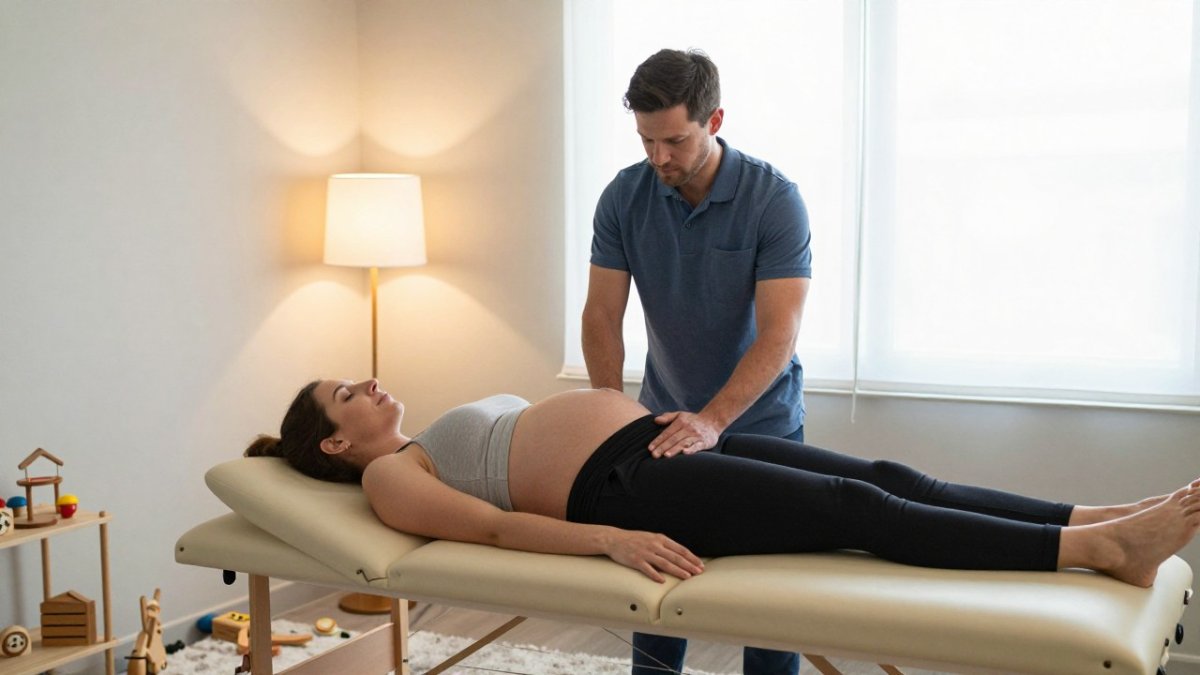
Your first visit usually starts with a conversation. We will ask about your pregnancy, your symptoms, and what you hope to feel better. This part is just as important as the physical exam.

Next, we look at how your body moves. We check your posture, how your spine and pelvis line up, and how freely your joints move. Everything is done gently and with your comfort in mind.
Gentle, pregnancy-adapted techniques are used throughout. We use special positioning, such as the Webster Technique. You will always be told what we are doing and why before we begin.
Keep in mind that a first visit is about assessment and planning. You should not feel pressured into any particular treatment on day one.
What to Wear, Bring, and Do the Day Of
On the day of your appointment, dress in comfortable, loose clothing you can move in easily. Leggings and a soft top work well. Wear shoes you can slip off quickly.
Bring the following:
- Your medical history summary and any records
- Your written list of questions
- A water bottle
Arrive a few minutes early so you can finish any intake paperwork. Eat normally and stay hydrated before your visit. If you feel dizzy or unwell that day, call the office to ask whether you should reschedule.
Once you are in the room, take your time. You can pause at any point, ask us to slow down, or tell us if something feels uncomfortable.
Credentials, Consent, and Your First Care Plan
Before any treatment, you should feel confident in who is caring for you. Dr. Jonathon Harrison, DC, is board certified and has passed the National Board of Chiropractic Examiners (NBCE) examinations. He is also Webster Technique certified (2012) and Pediatric Experience Certified (2022).
Ask to see credentials and training in pregnancy-specific care. A good chiropractor will welcome these questions. Concrete questions to bring include: Which pregnancy-specific techniques are you trained in, and where did you complete that training? How do you decide when a technique is not appropriate for a given trimester? Ask for the name of the certifying body behind any credential, so you can confirm it is a recognized program. Find honest answers about insurance, first-visit expectations, and how care works before you commit to a plan.
Watch out: a certificate on the wall is a starting point, not a finish line. Ask how the chiropractor applies that training to your specific stage of pregnancy and symptoms.
You will also be asked for informed consent. This means you understand what the care involves, the possible risks, and your right to say no at any time. Consent is not a one-time signature; you can withdraw it before or during any visit. Ask what the alternatives are, including doing nothing or waiting, and what signs would tell you to stop and call your OB. Our goal is for you to make decisions with full information.
At the end of your first visit, we will talk through a proposed care plan. It will explain what we recommend, how often we suggest visits, and what you can expect over the coming weeks. Ask how the plan would change if your symptoms improve, stay the same, or worsen, and what milestones would prompt a reassessment. You can ask questions and decide what feels right for you.
Set realistic expectations. Responses vary, and chiropractic care is not a treatment for every pregnancy symptom. A balanced plan pairs hands-on care with the home guidance you are given, and it stays flexible as your body changes. If something does not feel right, say so, and we will adjust the plan together.
Booking Your First Prenatal Visit with New Directions Chiropractic
Ready to take the next step? Preparing ahead makes your first prenatal visit smoother, and we are here to help you feel supported from the first appointment. Book your first visit with New Directions Chiropractic and let us start building a plan around you and your baby.
Frequently Asked Questions
Is it safe to go to a chiropractor during the first trimester?
Many expecting mothers wonder about this, and it is a fair question to bring to your first visit. At New Directions Chiropractic, the approach is gentle and adapted to pregnancy. Your first appointment includes a review of your health history, including any concerns about how far along you are, so the doctor can decide what care fits your body. Share everything about your pregnancy at the start, and ask any questions you have before any adjustment begins. Your comfort and your baby's well-being guide every decision.
What should I wear to my first prenatal chiropractic appointment?
Wear loose, comfortable clothing that lets you move easily and sit or lie down without fuss. Leggings or soft pants and a stretchy top work well, since you may be asked to change for part of the exam. Avoid anything tight around your belly or waist. Wearing layers helps you stay comfortable if the room feels warm or cool. Arriving in clothes you can easily take off and put back on makes the exam smoother for both you and the doctor.
What questions should I ask my chiropractor during my first prenatal visit?
Ask how long the doctor has been caring for pregnant patients and what pregnancy-specific training they have completed. Ask which techniques they use during pregnancy and how they adjust for each trimester. Find out what the consultation includes and how your care plan is put together. Writing these questions down before you arrive helps you remember them in the room.
Do I need to bring my medical records to my first chiropractic visit?
Bringing your medical records, or a clear summary of them, is very helpful. Include your pregnancy notes and details about past injuries or surgeries. If you have a due date or a care provider's name, write those down too. A complete history lets the doctor understand your pregnancy and plan a safer, more personalized visit from the start.