 blog
Is a Pediatric Chiropractor Worth It for Infants?
Last Updated: October 30, 2026
Quick Summary
A pediatric chiropractor is worth it for infants only when you weigh training, transparency, and measurable progress, because the evidence for infant chiropractic care is limited and mixed. Set a specific concern and a set number of visits before you spend a dollar, then reassess honestly.
- The first infant visit starts with a health history and parent interview, not an adjustment.
- Infant techniques use light fingertip contact, never high-velocity adjustments on a newborn.
- Ask providers what pediatric training they completed and how many infants they see weekly.
- Define a measurable goal and a visit checkpoint before you begin care.
- If nothing has changed by your checkpoint, the value isn't there for your family.
Table of Contents
- What Does a Pediatric Chiropractor Do for Babies?
- Infant Chiropractic Care Safety: What Parents Need to Know
- Pediatric Chiropractor Qualifications: How to Vet a Provider
- Questions to Ask a Pediatric Chiropractor Before Your First Visit
- Potential Benefits for Colic, Reflux, Sleep, and Feeding
- How Infant Chiropractic Care Compares to Other Approaches
- Costs, Insurance, and Value: Is It Worth It?
- Book Your First Visit at New Directions Chiropractic
- Frequently Asked Questions
What Does a Pediatric Chiropractor Do for Babies?
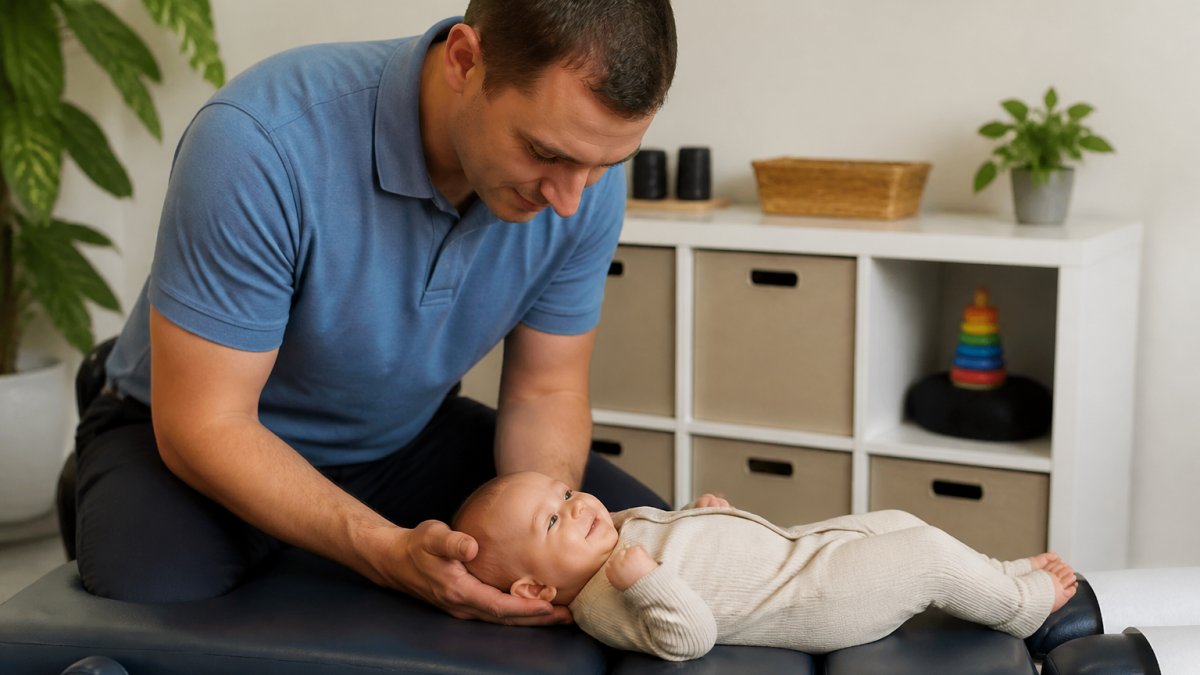
A pediatric chiropractor is a licensed chiropractor who focuses on infants and children, using gentle, age-appropriate techniques rather than the forceful adjustments adults receive. At New Directions Chiropractic, we explain this distinction to parents who come to us with questions.
So what actually happens in a visit? The short answer: far less than most parents expect.
Assessment and Gentle Techniques
The first visit starts with questions, not adjustments. We ask about your pregnancy, your baby's delivery, feeding patterns, sleep, and any concerns you've noticed. Then we observe how your baby moves, turns their head, and settles.
The hands-on portion uses light pressure. Think fingertip contact, not cracking. Infants don't have the joint structure for high-velocity adjustments, and no responsible provider performs them on a newborn.
Here's what a typical visit includes:
- A health history and parent interview
- Observation of movement and posture
- Gentle palpation of the spine and surrounding tissues
- Light contact techniques tailored to your baby's age
- Home guidance you can use between visits

If you want a transparent walkthrough before booking, read what happens during an infant appointment.
Infant Chiropractic Care Safety: What Parents Need to Know
Infant chiropractic care safety is the question we hear most, and it deserves a straight answer. The techniques used on babies are low-force and adapted to their size. Serious adverse events are uncommon in published reports, and parents should always ask about risks before care begins.
Risks, Adverse Events, and Contraindications
Honest providers will tell you the same things we do:
- Mild fussiness or temporary soreness can happen after a visit
- Some conditions need evaluation before any hands-on care
- Certain structural or neurological findings mean chiropractic care isn't appropriate
Watch out: skipping a thorough history is the biggest red flag in pediatric care. A provider who adjusts your baby in the first five minutes, without asking about delivery, feeding, or medical history, is not practicing carefully.
Parents who want a deeper look at the research and red flags can read whether chiropractic is safe for babies.
Pediatric Chiropractor Qualifications: How to Vet a Provider
Pediatric chiropractor qualifications vary more than most parents realize. All chiropractors are licensed, but extra pediatric training is voluntary. That means you have to ask.
Look for providers with pediatric training, continuing education, and a practice that treats children regularly. Our own Dr. Jonathon Harrison is Board Certified, a Webster Technique Certified provider (2012), and holds Pediatric Experience Certification (2022).
Ask directly:
- What pediatric training have you completed?
- How many infants do you see in a typical week?
- What techniques do you use on newborns?
- When would you decline to treat a baby?
A provider who answers these with specifics, and who refers out when a case isn't a fit, is the one you want.
Questions to Ask a Pediatric Chiropractor Before Your First Visit
Before your first visit, ask about training, techniques, expected visit frequency, and how progress gets measured. A good provider welcomes these questions. A defensive one tells you something.
Bring this list:
- What pediatric certifications do you hold?
- What does an infant adjustment actually involve?
- How will we measure whether care is helping?
- How many visits before we reassess?
- What signs mean we should stop care?
- Do you coordinate with our pediatrician?
- What does care cost, and what does insurance cover?
You can also review honest answers to common questions about first visits and insurance before you call.
Potential Benefits for Colic, Reflux, Sleep, and Feeding
Potential benefits for infants center on four complaints parents bring to us most: colic, reflux, sleep, and feeding difficulties. Parents often arrive exhausted and skeptical, which is fair.
Evidence Quality and Limits by Claimed Benefit
Here's where we stay honest. The evidence for infant chiropractic care is limited and mixed, and results vary between families.
| Concern | What Research Suggests | What to Expect |
|---|---|---|
| Colic and crying | Mixed results, small studies | Possible improvement, not a guarantee |
| Reflux | Limited evidence | Supportive care alongside feeding changes |
| Sleep | Parent-reported gains | Gradual change over weeks |
| Feeding | Some positive reports | Often combined with lactation support |
For a fuller look at colic specifically, see our guide on colic and chiropractic care.
How Infant Chiropractic Care Compares to Other Approaches
Compared with other approaches, chiropractic care sits alongside, not above, options like feeding adjustments, soothing routines, and time. What most guides miss is how to decide which lever to pull first, and what each approach actually does. Here's a practical comparison.
What Each Approach Actually Does
| Approach | What It Targets | Typical Effort | What to Watch For |
|---|---|---|---|
| Feeding adjustments | Mechanics of latch, flow, and positioning | Moderate, requires trial and error | Changes take days to weeks to show |
| Soothing routines | Nervous system regulation, sleep cues | Low, repeatable at home | Works best with consistency |
| Time | Normal infant development | None | Some concerns resolve on their own |
| Chiropractic care | Spinal and joint mobility, muscular tension | Office visits plus home guidance | Evidence is limited; set a checkpoint |
A Decision Framework, Not a Menu
The useful question isn't "which one is best", it's "which one fits this concern right now." A simple way to think about it:
- If the concern is feeding mechanics, latch, flow, positioning, feeding-focused support is usually the most direct lever, and chiropractic care can be a gentle add-on when tension or mobility seems to be part of the picture.
- If the concern is crying and fussiness with no feeding issue, soothing routines and time are low-risk places to start, and chiropractic care is a reasonable trial with a defined checkpoint.
- If the concern is sleep, routines and environment changes come first because they're free and low-risk; chiropractic care is worth trying only if you can name a measurable goal.
- If the concern is spinal or joint mobility, for example, a baby who consistently turns their head one way, that's the clearest fit for a chiropractic assessment.
The Trade-Offs Nobody Lists
Every approach has a cost beyond money:
- Time cost: feeding adjustments and soothing routines take parental bandwidth. Chiropractic visits take time out of the week and travel.
- Uncertainty cost: the evidence for infant chiropractic care is limited and mixed, so any trial should come with a checkpoint. The same is true of many parenting interventions, the difference is whether the provider is honest about it.
- Opportunity cost: every week spent on one approach is a week not spent on another. That's why stacking works best when you can name what each approach is supposed to do.
For a fuller look at colic specifically, see our guide on colic and chiropractic care.
Costs, Insurance, and Value: Is It Worth It?
Whether infant chiropractic care is worth it depends on three things: what you pay per visit, what your insurance actually covers, and whether you set a clear point to reassess. Most guides skip the money conversation entirely, which is exactly why parents feel blindsided at the front desk.
What Infant Visits Typically Cost
Pricing depends on the visit, the plan, and your coverage. For current prices or a quote, contact New Directions Chiropractic through our website before you book.
A few cost mechanics worth understanding:
- Visit frequency: ask for the recommended frequency in writing so you can plan your budget.
- Packages and prepay plans: ask whether any bundle or prepaid option is refundable if you stop care.
- Additional services: ask which services, if any, are billed separately from the visit.
Insurance and Coverage Questions to Ask
Many insurance plans include chiropractic benefits, but coverage varies by plan. Before your first visit, call both your insurer and the practice and get answers to these:
- Is a diagnosis or referral required for pediatric chiropractic coverage?
- What is my copay versus coinsurance for an office visit?
- Does my plan cap the number of chiropractic visits per year?
- Is the provider in-network, and what would out-of-network billing look like?
- What is the cash-pay rate if I choose not to use insurance?
A Transparent Way to Weigh Cost Against Uncertain Benefits
Because the evidence for infant chiropractic care is limited and mixed, the honest way to judge value is to set a reassessment point before you spend a dollar. Pick a specific concern, crying episodes, sleep stretches, feeding comfort, and a specific number of visits. If you don't see meaningful change by that checkpoint, stop and rethink. That protects your budget and keeps expectations grounded.
A simple framework:
- Define the goal. "Fewer colic episodes at night" is measurable; "better alignment" is not.
- Set the checkpoint. Decide in advance how many visits you'll try before reassessing.
- Track it. Keep a simple log of the concern between visits.
- Reassess honestly. If nothing has changed, the value isn't there for your family, and that's a legitimate answer.
For a fuller look at first-visit logistics and insurance questions, see our guide on honest answers to common questions.
Book Your First Visit at New Directions Chiropractic
Deciding whether a pediatric chiropractor is worth it for your baby comes down to training, transparency, and measurable progress.
At New Directions Chiropractic, Dr. Jonathon Harrison provides nervous system-focused care for infants, children, and expecting mothers in a kid-friendly setting. We were voted Mom Approved 2026 by DFW Child, and local moms across North Dallas have chosen us.
Our approach includes education-focused visits and techniques tailored to needs from newborns to grandparents. To learn more about starting your wellness journey, review what to expect on your first visit.
Frequently Asked Questions
Is chiropractic care safe for babies?
Infant chiropractic care safety depends on the provider's training and the techniques used. Parents should ask about the chiropractor's pediatric certification and experience. Always disclose your baby's full health history, including any birth complications or diagnosed conditions, so the provider can screen for contraindications.
What does a pediatric chiropractor do for an infant during a visit?
A visit typically starts with a health history and a hands-on assessment of spinal alignment, mobility, and nervous system function. The chiropractor should explain findings and recommend a visit frequency based on your baby's response.
At what age can a baby see a chiropractor?
Before scheduling, confirm the chiropractor holds a pediatric certification and has experience with newborns. For babies with complex medical conditions, clear the visit with the provider who manages that condition first.
How many chiropractic visits might an infant need?
Visit frequency varies by the concern and the baby's response. Ask the chiropractor to outline expected progress and a review point so you can decide whether to continue. You should never feel pressured to commit to months of care upfront.
If your baby is struggling with sleep, feeding, or fussiness and you want a gentle, honest assessment, we're here to help. Get started with New Directions Chiropractic and give your family a clear next step.