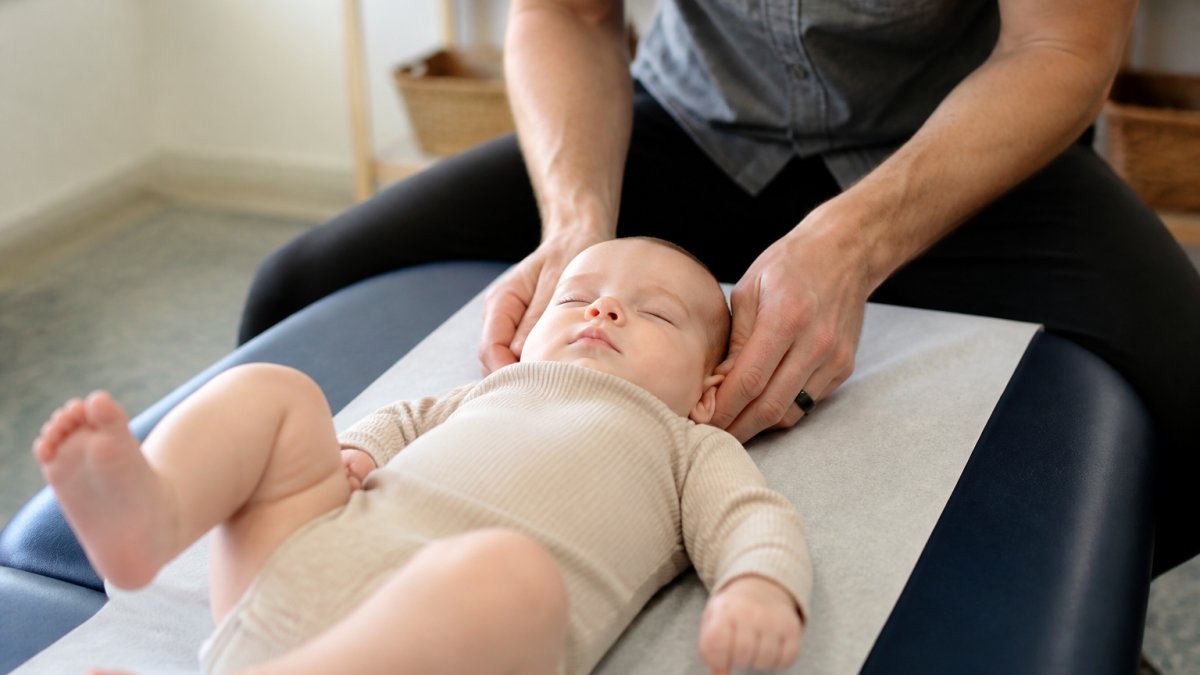
 ultimate-guide
Is Chiropractic Safe for Babies: A Complete Guide
Table of Contents
- Is Chiropractic Safe for Babies: What the Evidence Shows
- How Chiropractors Adjust Babies: Techniques and Pressure Differences
- Baby Chiropractor Risks: Understanding Potential Adverse Events
- When to Take a Baby to a Chiropractor: Common Reasons and Red Flags
- Chiropractic for Infant Colic: What Research Tells Us
- Pediatric vs. General Chiropractic Training: Why It Matters
- Before Your Baby's First Appointment: Preparation and Questions to Ask
- Frequently Asked Questions
Last Updated: October 21, 2026
Is Chiropractic Safe for Babies: What the Evidence Shows
Parents often ask whether chiropractic care is safe for babies. At New Directions Chiropractic, we understand this concern deeply, it's one of the first questions families bring to us when considering nervous system-focused care for their infants.
Is chiropractic safe for babies? The safety profile depends heavily on whether the chiropractor uses gentle, age-appropriate techniques specifically designed for infants rather than adult-style manipulation. Research and professional guidelines distinguish between high-velocity spinal manipulation (the forceful adjustments used in adults) and the light-pressure techniques suitable for pediatric patients.
The evidence on infant chiropractic care is mixed. Some parents report improvements in sleep, feeding, or excessive crying after gentle adjustments. However, published studies on effectiveness remain limited, and the research that exists has methodological constraints.
At New Directions Chiropractic, we emphasize informed consent and transparent communication about what evidence supports and what remains uncertain. Parents deserve to understand both the potential benefits families report and the known risks before making decisions about their baby's care.
How Chiropractors Adjust Babies: Techniques and Pressure Differences
The techniques used on infants bear little resemblance to the audible "cracking" adjustments adults receive. Pediatric chiropractors trained in infant care use fingertip pressure, light mobilization, and gentle range-of-motion work rather than high-velocity thrust manipulation.
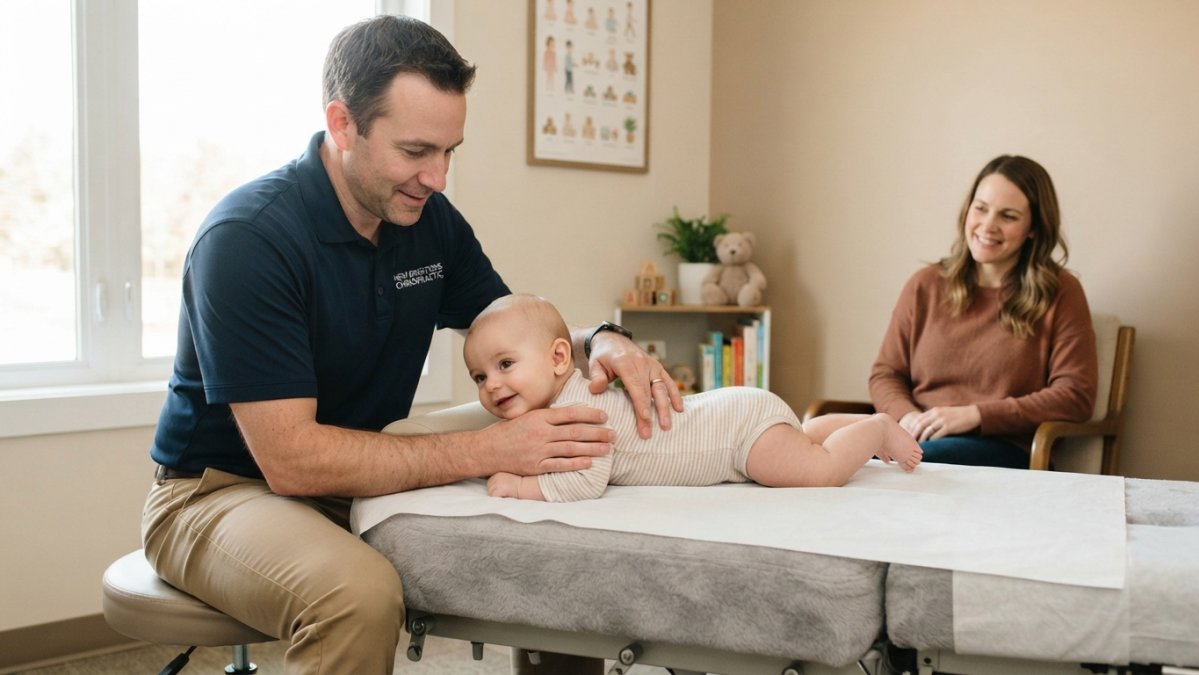
A typical infant adjustment involves the practitioner using the pad of one finger or thumb to apply sustained, gentle pressure to specific vertebrae or joints.
High-velocity manipulation, the thrust technique that produces the audible crack, is contraindicated in infants. The developing spine, particularly the cervical (neck) region, lacks the structural maturity to safely tolerate such force.
The difference between gentle pressure and adult-style manipulation is the difference between safety and risk. Infants cannot communicate pain or discomfort the way older children can, which makes conservative, low-force approaches essential.
Baby Chiropractor Risks: Understanding Potential Adverse Events
While serious complications from infant chiropractic care are uncommon, they do occur and warrant clear discussion. Understanding potential risks is part of making an informed decision.
The most serious documented adverse events involve vertebral artery dissection, a tear in the artery that supplies the brain, which can lead to stroke. These cases have been associated with high-velocity manipulation of the neck in infants.
Less severe but more common concerns include temporary irritability, mild swelling, or increased crying following adjustment. Some babies experience no change in their presenting symptoms.
Risk factors that increase concern include:
- Applying adult-style high-velocity manipulation to an infant
- Lack of specialized pediatric training on the part of the practitioner
- Underlying conditions like connective tissue disorders, bleeding disorders, or bone fragility
- Cervical (neck) manipulation without appropriate training and justification
- Adjustment of very young infants (under 8 weeks) without clear clinical indication
The vertebral artery runs through small openings in the cervical vertebrae. In infants, this anatomy is still developing, and the artery is more vulnerable to injury from rotational or forceful movements. This is why many pediatric guidelines recommend avoiding high-velocity cervical manipulation in infants entirely.
At New Directions Chiropractic, we prioritize conservative, evidence-informed practice. Gentle techniques, proper training, and honest communication about what we know and don't know are foundational to our approach.
When to Take a Baby to a Chiropractor: Common Reasons and Red Flags
Parents seek chiropractic care for babies for several reasons. Common concerns include difficulty latching during breastfeeding, persistent crying or colic, sleep disturbances, torticollis (neck stiffness or head-turning preference), and general developmental support.
The theory behind infant chiropractic care centers on the nervous system. Proponents suggest that birth trauma, in-utero positioning, or musculoskeletal restrictions can interfere with nervous system function and contribute to feeding difficulties, sleep issues, or excessive crying.
However, some of these conditions have other causes that require medical evaluation first. Before pursuing chiropractic care, babies with feeding difficulties should be assessed by a pediatrician or lactation consultant to rule out tongue-tie, lip-tie, or other structural issues. Excessive crying warrants pediatric evaluation to exclude infection, reflux, or other medical causes.
Red flags requiring urgent medical evaluation, not chiropractic care:
- Fever or signs of infection
- Difficulty breathing or persistent respiratory distress
- Bleeding or unexplained bruising
- Severe lethargy or unresponsiveness
- Vomiting or inability to keep food down
- Seizures or abnormal movements
- Bulging fontanel (soft spot on head)
- Severe or worsening head-turning preference with neck stiffness
These warrant immediate pediatric assessment. Chiropractic care may be appropriate after medical causes have been ruled out, but never as a substitute for urgent medical evaluation when red flags are present.
Chiropractic for Infant Colic: What Research Tells Us
Infant colic, defined as excessive crying lasting more than three hours per day, more than three days per week, for more than three weeks, affects roughly one in five babies and causes significant parental stress. Parents naturally seek solutions, and some turn to chiropractic care.
A limited number of studies have examined whether chiropractic adjustment helps colic. Some small studies suggest modest improvements in crying duration or frequency following gentle spinal manipulation, while others show no significant difference compared to control groups.
What research does show is that many causes of excessive crying, including feeding difficulties, reflux, food sensitivities, and developmental factors, improve naturally over time as babies mature. By four to five months, most colicky babies show significant improvement regardless of intervention.
The evidence for chiropractic care in colic is not strong enough to recommend it as a first-line treatment. Pediatric guidelines typically recommend ruling out medical causes, optimizing feeding technique, and providing parental support.
Pediatric vs. General Chiropractic Training: Why It Matters
Not all chiropractors have specialized training in pediatric care. This distinction is crucial for safety.
Chiropractic education includes a four-year doctoral program covering anatomy, physiology, neurology, and technique. However, pediatric specialization is not required. A chiropractor can graduate and practice without any formal training in infant anatomy, pediatric conditions, or age-appropriate adjustment techniques.
Specialized pediatric training typically involves additional coursework, clinical hours, and hands-on experience working with infants and children. Organizations like the International Chiropractic Pediatric Association (ICPA) offer certification programs that require practitioners to demonstrate competency in pediatric assessment, technique modification, and communication with families. Practitioners with this certification have committed to continuing education in pediatric care.
Key differences between general and pediatric-trained chiropractors include:
- Technique modification: Pediatric-trained practitioners understand how to adjust force, duration, and approach based on the child's age and developmental stage
- Assessment skills: Pediatric specialists can differentiate between normal development and conditions requiring referral
- Red flag recognition: Training includes identification of conditions that require medical evaluation rather than chiropractic care
- Communication: Pediatric practitioners typically excel at explaining findings and recommendations to anxious parents
- Scope of practice: Pediatric-trained chiropractors understand the limits of what chiropractic care can address
Dr. Jonathon Harrison at New Directions Chiropractic brings specialized training and experience to families seeking nervous system-focused care for their infants and children. This training informs every aspect of how we approach baby chiropractic care, from the initial consultation through gentle adjustment techniques.
Before Your Baby's First Appointment: Preparation and Questions to Ask
If you're considering chiropractic care for your baby, preparation and informed decision-making are essential. Here's what you should do before scheduling an appointment.
Step 1: Get pediatric clearance. Have your baby evaluated by your pediatrician first, especially if your baby has feeding difficulties, excessive crying, sleep disturbances, or other concerns.
Step 2: Research the practitioner's credentials. Verify that the chiropractor has specialized training in pediatric care. Look for certifications from organizations like the ICPA or documented continuing education in pediatric chiropractic.
Questions to ask during your consultation:
| Question | Why It Matters |
|---|---|
| What is your specific training in pediatric chiropractic care? | Ensures the practitioner has formal education in infant-specific techniques |
| How do you modify your technique for infants versus adults? | Confirms they understand developmental differences and use appropriate force |
| What conditions do you commonly see in infants, and what results do families typically report? | Sets realistic expectations and reveals their experience level |
| How do you assess whether chiropractic care is appropriate for my baby's specific situation? | Shows whether they consider medical causes and know when to refer |
| What will you do if you identify a condition requiring medical evaluation? | Demonstrates appropriate scope of practice and willingness to refer |
| How many visits do you typically recommend, and how will we know if care is working? | Prevents open-ended treatment and establishes clear goals |
| What is your approach if my baby shows signs of distress during adjustment? | Reveals their commitment to stopping immediately if the baby is uncomfortable |
Step 4: Trust your instincts about the environment. A pediatric-friendly clinic should feel calm, welcoming, and safe. The practitioner should be unhurried, willing to answer questions thoroughly, and respectful of your concerns.
Step 5: Start with conservative care. If you proceed with chiropractic care, begin with a limited number of visits (typically 2-4) to assess how your baby responds.
Deciding whether chiropractic care is appropriate for your baby is deeply personal and depends on your baby's specific situation, your comfort level, and the qualifications of the practitioner. If you're considering this care for your family, book your first visit to discuss your baby's unique needs with Dr.
Frequently Asked Questions
Is chiropractic care safe for newborns?
Chiropractic care for newborns remains a topic with limited high-quality research. Pediatric chiropractors use gentle pressure and techniques specifically adapted for infants' developing spines, which differ significantly from adult adjustments. However, rare but serious adverse events have been reported in medical literature, including vertebral artery dissection and stroke. Parents should consult with their pediatrician first, choose a practitioner with documented pediatric training, and understand that evidence for effectiveness in newborns is not yet conclusive.
What are the main risks of baby chiropractor care?
Known risks include rare but serious events such as stroke, vertebral artery injury, and fractures of infant vertebrae or growth plates. More common minor risks involve temporary irritability or soreness. The risk level depends on the technique used, the practitioner's training, and the infant's individual anatomy. High-velocity manipulation carries higher risk than gentle pressure techniques. Parents should ask practitioners about their specific training in pediatric assessment and their approach to identifying contraindications before treatment begins.
How do chiropractors adjust babies differently than adults?
Pediatric chiropractic adjustments use fingertip or light pressure instead of the high-velocity, high-force techniques applied to adults. Infant spines contain cartilage rather than fully ossified bone, and growth plates are still developing, requiring much gentler contact. Practitioners trained in pediatric care assess the infant's specific presentation and may use mobilization, soft-tissue work, or cranial techniques rather than traditional spinal manipulation. The adjustment is tailored to the baby's size, age, and individual needs.
Can chiropractic help with infant colic?
Some parents report improvements in colic symptoms after chiropractic care, but clinical evidence remains limited. A few small studies suggest spinal manipulation may help reduce excessive crying in some infants, though results are not consistent across research. Colic has multiple causes, and many cases resolve naturally over time. Before pursuing chiropractic for colic, parents should have their pediatrician rule out feeding difficulties, reflux, allergies, or other medical causes. Chiropractic should complement, not replace, pediatric evaluation.
What should I ask a chiropractor before bringing my baby in?
Ask about the practitioner's pediatric training credentials, including any certifications in pediatric chiropractic or specialized training in infant care. Request details on the specific techniques they use and whether they employ high-velocity manipulation or gentle pressure methods. Ask how they screen for contraindications and what they would do if red flags emerge during assessment. Inquire about their communication approach with your pediatrician and what outcomes they expect to see and over what timeframe. Request references from other parents who have brought infants to their practice.
When should I take my baby to a chiropractor instead of seeing my pediatrician?
Chiropractic care should not replace pediatric medical evaluation. Seek your pediatrician first for any new symptoms or concerns. Red flags requiring urgent pediatric assessment include fever, difficulty feeding, persistent vomiting, unusual head positioning, or significant developmental delays. If your pediatrician has ruled out medical causes and you are interested in exploring chiropractic as a complementary approach for musculoskeletal concerns or nervous system support, then a consultation with a pediatrically trained chiropractor may be appropriate.
What's the difference between pediatric and general chiropractic training?
General chiropractic training focuses on adult spinal anatomy and adjustment techniques. Pediatric chiropractic training includes specialized coursework on infant and child anatomy, developmental milestones, age-specific contraindications, and gentle adjustment methods suited to growing bodies. Practitioners with pediatric certification have completed additional education in recognizing conditions requiring referral to medical specialists and adapting their assessment and technique to children's unique needs. Verify credentials through the chiropractor's licensing board or professional organizations.