 blog
The Chiropractic Place for Mommy and Me: What to Expect
Table of Contents
- What Mommy and Me Chiropractic Care Actually Means
- What to Expect at a Chiropractic Appointment for You and Your Child
- Chiropractic Care for Babies: Safety, Techniques, and What Parents Should Know
- Choosing a Prenatal Chiropractor for Pregnancy and Postpartum Recovery
- Questions to Ask a Pediatric Chiropractor Before You Book
- Comparing Local Family Chiropractic Providers: What to Weigh
- Frequently Asked Questions
Last Updated: October 19, 2026
What Mommy and Me Chiropractic Care Actually Means
Most parents arrive with the same question: is this real care or a wellness fad? The honest answer sits in the middle. Chiropractic focuses on how the spine and nervous system work together.
That distinction matters. A pediatric adjustment looks nothing like an adult one. There is no twisting, no cracking. The pressure used on a newborn is closer to what you would use to test a ripe peach.
We built our practice around that reality: a kid-friendly room, a parent in the room for every visit, and an explanation before anything happens. Below, we walk through what a visit looks like, how to judge a provider's credentials, and the questions worth asking before you book.
What to Expect at a Chiropractic Appointment for You and Your Child
A typical mommy and me visit includes a consultation, an exam for each person, and gentle care tailored to each stage. The first appointment is longer because it includes history and assessment.

The First Visit, Step by Step
- Paperwork and history. You will describe your pregnancy, delivery, your child's sleep and feeding patterns, and any prior injuries. Bring dates: delivery date, when a symptom started, and any pediatric diagnosis already on record.
- Consultation. The chiropractor asks what you want to change, whether that is sciatic pain, sleep, or latching, and what you have already tried. A good provider asks what your pediatrician or obstetrician has said before offering an opinion.
- Examination. For you: posture, range of motion, and pelvic alignment, plus how you stand, sit, and lift your child. For your child: gentle palpation and movement checks, done while you hold them, with attention to how they turn their head, track with their eyes, and settle.
- Findings. A good provider explains what they found in plain language before recommending anything, and separates what they can address from what belongs with a physician.
- Care. If care is appropriate, it happens that day. If it is not, a trustworthy provider says so and explains why.
- Reassessment plan. Before you leave, ask when the provider will recheck whether care is working. A written reassessment point, often after a short initial course, is the difference between a plan and an open-ended commitment.
How the Visit Changes by Age and Stage
- Pregnant patients. Later pregnancy usually means side-lying or seated positioning and pregnancy pillows on an adjustable table, because lying face down becomes uncomfortable. The exam focuses on pelvic alignment, ligament tension, and the lower-back and hip load of a growing belly.
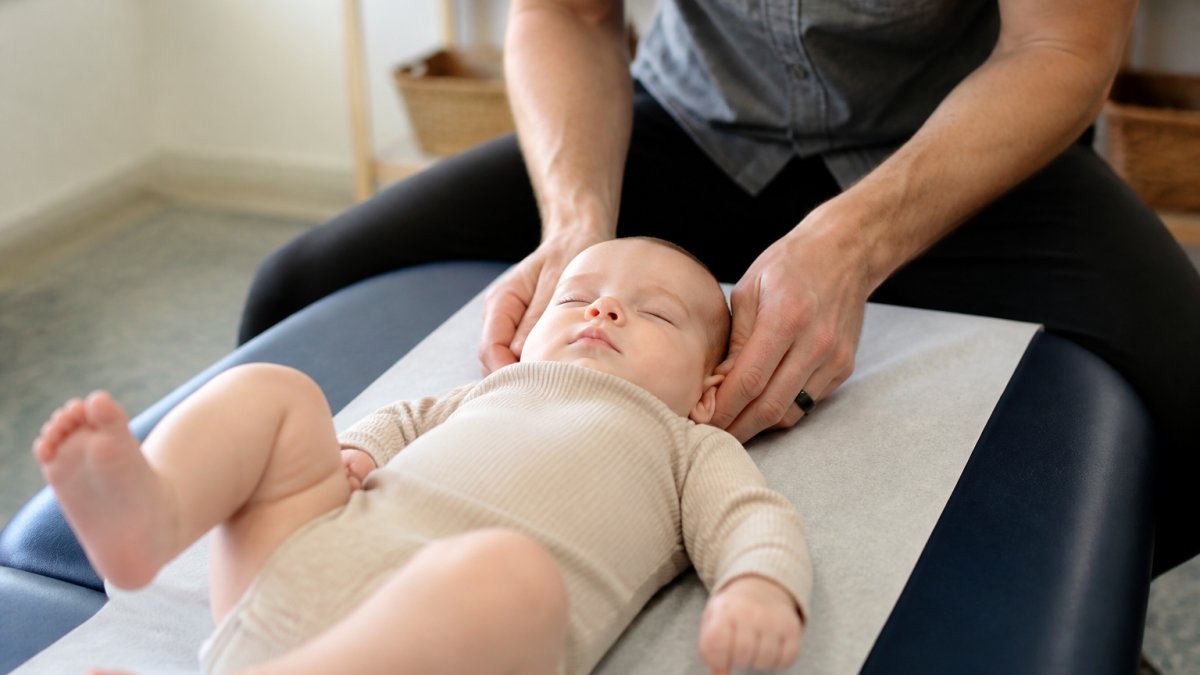
- Newborns. The exam is brief and done in your arms or on a padded surface. Contact is fingertip-light, and the whole sequence is often a few minutes. Providers typically ask about feeding, diapers, and sleep before touching anything.
- Toddlers and older children. The visit looks more like an adult exam in structure but with lighter force and more breaks. Providers often explain what they are doing to the child in simple words and let the child sit up between checks.
- Parents after delivery. Postpartum care addresses the physical load of feeding, carrying, and broken sleep. Ask how care changes after a cesarean, since abdominal healing changes what positioning is comfortable.
What to Bring and What to Wear
Wear or bring loose clothing you can move in, and bring a short list of medications and supplements for both of you. If your child has a pediatric appointment coming up, mention it, because coordination between providers is a mark of careful care. Expect the first visit to take more time compared with follow-ups, since history and assessment take the longest.
Red Flags That Change the Plan
A fever, poor weight gain, breathing trouble, or a sudden change in behavior belongs with a pediatrician first, not a chiropractor. The same is true for pregnancy complications such as bleeding or severe abdominal pain. A provider who redirects you to medical care in those situations is doing the job correctly, and that redirect is a useful signal when you are choosing where to book.
Chiropractic Care for Babies: Safety, Techniques, and What Parents Should Know
Chiropractic care for babies uses light fingertip pressure, and is generally considered low-risk when performed by a trained provider. The American Chiropractic Association notes that pediatric chiropractic is a specialty area requiring additional training beyond the standard doctorate.
What actually happens during an infant adjustment:
- The baby lies on a parent's chest or a padded table.
- The provider uses fingertip contact on the spine and pelvis.
- Any movement is small and slow, often no more than a gentle bounce.
- The whole sequence typically takes a few minutes.
What it is not: it is not a substitute for pediatric medical care. If your baby has a fever, poor weight gain, or breathing trouble, call your pediatrician first. Chiropractic works alongside medical care, not instead of it.
Choosing a Prenatal Chiropractor for Pregnancy and Postpartum Recovery
A prenatal chiropractor should be trained in pregnancy-specific techniques, most commonly the Webster Technique, which focuses on pelvic alignment and ligament tension. Dr. Jonathon Harrison holds Webster Technique certification from 2012, which means he has trained specifically in this approach.
What to look for in a prenatal provider:
- Table setup. Pregnancy pillows and adjustable tables let you lie face down comfortably.
- Positioning. Side-lying and seated adjustments are common in later pregnancy.
- Postpartum planning. Ask how care changes after delivery, especially if you had a cesarean.
Postpartum care addresses the physical load of feeding, carrying, and broken sleep. Many mothers notice shoulder and mid-back tension before they notice anything else.
Questions to Ask a Pediatric Chiropractor Before You Book
Ask about training, technique, visit frequency, and how the provider handles a child who will not settle. The answers tell you more than any website copy.
Credentials That Matter
Look for three things: a state license, pediatric-specific continuing education, and membership in a professional body. The National Board of Chiropractic Examiners administers the exams every licensed chiropractor must pass, so a license is the floor, not the ceiling.
Dr. Harrison holds Pediatric Experience certification from 2022, and our practice was voted Mom Approved 2026 by DFW Child. Those are useful signals, but they do not replace your own judgment in the room.
A short list to bring to the call:
- How many infants do you treat in a typical week?
- What technique do you use for a newborn, and can you show me on a model?
- How many visits before we reassess whether this is working?
- Will you coordinate with our pediatrician?
- What would make you tell us to stop care?
Comparing Local Family Chiropractic Providers: What to Weigh
Compare providers on five things: pediatric training, whether parents stay in the room, how care plans are explained, how pricing and insurance are handled, and how the office adapts care by age. The unique angle here is decision support: most clinic pages tell you what they offer but not how to verify it or what it will cost, so this section gives you criteria you can actually check.
| What to Compare | What Good Looks Like | How to Verify It | Why It Matters |
|---|---|---|---|
| Pediatric training | Documented post-graduate certification, not just a license | Ask for the certificate name and year, and confirm it with the issuing body | Infant technique differs from adult care |
| Parent presence | You stay in the room, every visit | Ask directly on the phone before booking | You see exactly what is done |
| Care plan clarity | Written reassessment points and a stated visit range | Ask for the plan in writing before care starts | Prevents open-ended commitments |
| Pricing and insurance | Fees, insurance acceptance, and payment options explained upfront in writing | Ask for a written estimate and a list of accepted plans | Avoids surprise bills |
| Age-specific adaptation | Different positioning and technique for pregnancy, newborns, and older children | Ask how a newborn visit differs from an adult visit | Shows care is tailored, not routine |
Credentials: What the Letters Mean and How to Check Them
A state license is the floor, not the ceiling. The National Board of Chiropractic Examiners administers the exams every licensed chiropractor must pass, so a license confirms basic competence but says nothing about pediatric training. Post-graduate pediatric certification is separate, and the certificate name and year should be something the office can state plainly. The Webster Technique is a pregnancy-specific approach focused on pelvic alignment and ligament tension; a provider certified in it should be able to tell you the year and the certifying body. If an office cannot name the certificate or the year, treat the claim as marketing rather than training.
Pricing and Insurance: Questions That Get Real Answers
Useful questions:
Safety and Evidence: What to Ask About Suitability
Gentle care is not the same as risk-free care. Ask what conditions the provider would decline to treat, how they screen for contraindications, and when they would send you to a physician instead. A provider who can describe those limits clearly is more trustworthy than one who promises to fix colic, reflux, or developmental delays outright. The American Academy of Pediatrics is a useful reference for understanding what pediatric care should and should not include, and it helps you frame questions about coordination with your child's pediatrician.
As the chiropractic place for mommy and me, we keep our own plans short and reassess often, because parents deserve to know whether care is working rather than assuming it is.
Frequently Asked Questions
What is mommy-and-me chiropractic care?
It is a family-focused approach where a mother and her child are evaluated and cared for in the same visit, often at the same clinic. The mom's care may address pregnancy-related discomfort or postpartum recovery, while the child's care focuses on gentle, age-appropriate assessment. At New Directions Chiropractic, care is nervous system-focused and tailored to each family member, from newborns to grandparents, in a kid-friendly environment. Ask during booking whether mom and baby can be scheduled back to back so one trip covers both.
Can babies and children receive chiropractic care?
Yes, chiropractic care for babies and children is offered by providers trained in pediatric techniques, and the approach differs from adult care. Infant adjustments use very light pressure. Before booking, confirm the chiropractor holds pediatric-specific training, such as Pediatric Experience Certification, and ask how many infants they treat weekly. A careful provider will assess first, explain findings, and only proceed when care is appropriate.
What questions should I ask before booking a chiropractic appointment for my child?
Ask about pediatric training and certification, how the first visit is structured, whether the provider coordinates with your pediatrician, and how progress is measured. Good questions to ask a pediatric chiropractor include how they modify techniques for infants, what signs would make them refer you elsewhere, and how many visits they typically recommend before reassessing. Clear answers without pressure are a good sign.
How is a prenatal chiropractor different from a regular chiropractor?
A prenatal chiropractor adjusts positioning, table setup, and technique for a pregnant body, and many hold the Webster Technique certification, which focuses on pelvic balance. Visits avoid lying flat on the stomach and account for ligament laxity and changing posture. If you are dealing with sciatic pain during pregnancy, ask whether the provider routinely treats expectant mothers and how they modify care by trimester. Your OB should always be informed of any care you add during pregnancy.